
Can you get pregnant with endometriosis? Understanding your fertility options
 Dr. Omar Aboali, MRCOG · 7 min read
In this article
Yes. Getting pregnant with endometriosis is possible. Many women with the condition conceive naturally and have healthy pregnancies. Endometriosis can, however, affect fertility in some women and make conception harder.
An endometriosis diagnosis does not automatically mean infertility. The effect on fertility varies from one woman to another and depends on the location and extent of the disease, ovarian function, the health of the fallopian tubes, age and other reproductive factors.
According to the European Society of Human Reproduction and Embryology (ESHRE), an estimated 60–70% of women with endometriosis are fertile and can conceive spontaneously.
If you have endometriosis and hope to start a family, there may be several routes to pregnancy. Understanding how the condition affects your reproductive health is the first step in choosing between them.
How does endometriosis affect fertility?
Endometriosis occurs when tissue similar to the lining of the uterus grows outside the uterus, usually on the ovaries, fallopian tubes and surrounding pelvic structures. Not every woman with endometriosis has fertility problems, but the condition can interfere with conception in several ways.
Inflammation in the pelvis
Endometriosis is associated with chronic inflammation in the pelvis. This may affect the normal interaction between egg, sperm and reproductive organs, making fertilisation and early embryo development more difficult.
Adhesions and scar tissue
Endometriosis can cause adhesions: bands of scar tissue that can make pelvic organs stick together. When adhesions involve the ovaries or fallopian tubes, they can interfere with the release and transport of the egg and reduce the chance of natural conception.
Ovarian endometriomas
Endometriomas, sometimes called chocolate cysts, are ovarian cysts caused by endometriosis. They can affect ovarian tissue and are sometimes associated with reduced ovarian reserve. Surgery to remove an endometrioma can also affect ovarian reserve, which is why treatment decisions need careful thought.
Changes in pelvic anatomy
In more extensive cases, endometriosis can distort the normal anatomy of the pelvis and the relationship between the ovaries, fallopian tubes and uterus. This can interfere with the egg’s passage through the reproductive tract.
Can you get pregnant naturally with endometriosis?
Yes. Natural conception is possible for many women with endometriosis, particularly when ovulation, ovarian function and fallopian tube function are preserved. Your chances depend on a combination of factors:
- Age: female fertility declines with age, which makes it a central factor in treatment planning.
- Ovarian reserve: the number of eggs remaining in the ovaries influences fertility treatment decisions.
- Location and extent of disease: endometriosis affecting the ovaries, fallopian tubes or surrounding structures may have a greater effect on conception.
- Fallopian tube function: healthy, working tubes are important for natural conception.
- Sperm health: male-factor fertility should also be assessed.
An individual fertility assessment shows whether trying naturally is reasonable or whether treatment should be considered.
Does endometriosis always cause infertility?
No. Endometriosis and infertility are not the same thing.
Endometriosis is associated with a higher risk of difficulty conceiving, but many women with the condition become pregnant without any problems.
Even the stage of endometriosis cannot reliably predict a woman’s ability to conceive. The revised American Society for Reproductive Medicine (ASRM) classification describes the extent of the disease but does not predict fertility. Fertility planning should therefore be based on your reproductive health as a whole, not the stage alone.
Can endometriosis surgery improve your chances of getting pregnant?
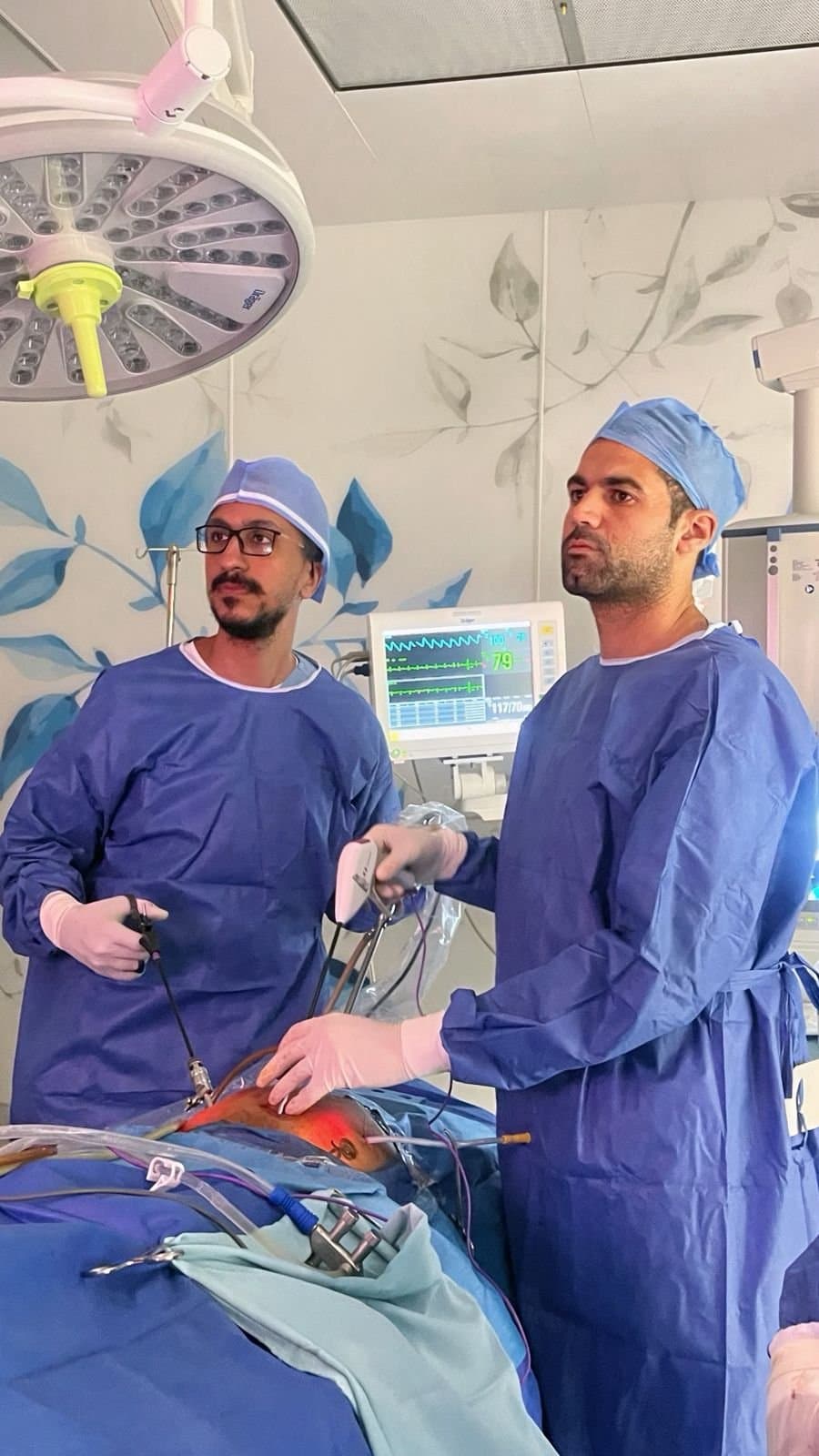
In some cases, yes. Laparoscopic surgery can improve the chance of spontaneous pregnancy by removing or treating endometriosis lesions, releasing adhesions and restoring normal pelvic anatomy.
Surgery is not automatically the best option for every woman who wants to conceive. Its benefits must be balanced against its risks, particularly when ovarian endometriomas are involved: removing cysts can damage healthy ovarian tissue and reduce ovarian reserve.
Before recommending surgery, a specialist should consider:
- The location and extent of the endometriosis
- Whether the ovaries or fallopian tubes are affected
- Your age and ovarian reserve
- Your previous surgical history
- How long you have been trying to conceive
- Whether other fertility factors are present
For deep endometriosis involving the bowel, bladder or ureters, surgical decisions may need a multidisciplinary team. The goal is not simply to remove visible disease, but to choose an approach that considers both symptoms and future fertility. More on this in endometriosis surgery: when it is recommended.
Endometriosis diagnosis and treatmentCan you get pregnant with endometriosis through IVF?
Yes. IVF is an important option for women whose endometriosis is affecting their ability to conceive.
During IVF, the ovaries are stimulated to produce several eggs. The eggs are collected and fertilised with sperm in the laboratory, the embryos are monitored, and a suitable embryo is transferred into the uterus.
IVF may be considered when:
- The fallopian tubes are damaged or blocked
- There are additional fertility factors, such as male-factor infertility
- Natural conception has not happened after an appropriate period of trying
- Previous surgery has not resulted in pregnancy
- Surgery is not appropriate or is unlikely to improve fertility
Having endometriosis does not mean IVF will be unsuccessful. Ovarian reserve, age, previous ovarian surgery and other fertility factors do influence the outcome, so a personal fertility assessment comes before choosing a treatment.
Fertility and IVF treatmentShould you have endometriosis surgery before IVF?
Not necessarily.
Surgery helps some women, but removing endometriosis before IVF does not automatically improve pregnancy rates. Surgery on an ovarian endometrioma, for example, may reduce ovarian reserve and with it the number of eggs available for IVF.
The decision should take into account your symptoms, ovarian reserve, previous treatment, the characteristics of any cyst and your fertility goals. In some cases, going directly to IVF is more appropriate than surgery first.
This is why decisions about endometriosis surgery and fertility treatment should be made together, by an experienced gynaecological and fertility team.
Does hormonal treatment help you get pregnant with endometriosis?
Hormonal treatments, including contraceptive pills and progestogens, are commonly used to manage endometriosis pain and suppress the disease.
Hormonal suppression does not improve the chance of spontaneous pregnancy while you are taking it. These treatments usually prevent or suppress ovulation, so they are not used as fertility treatment for women actively trying to conceive.
If pregnancy is not an immediate goal, hormonal treatment can help manage symptoms. NICE guidance also states that hormonal treatment has no lasting negative effect on later fertility.
The plan should therefore depend on whether your immediate priority is pain, fertility, or both.
When should you seek fertility advice if you have endometriosis?
If you have endometriosis and are planning a pregnancy, discussing your goals with a specialist early helps you understand your options.
You do not need to wait until you have had difficulty conceiving, particularly if you have known ovarian endometriomas, previous ovarian surgery or extensive disease. A fertility assessment may include:
- Pelvic ultrasound: to assess the ovaries, uterus and any endometriomas.
- Ovarian reserve tests: such as AMH and antral follicle count.
- Ovulation assessment: to establish whether ovulation is occurring.
- Fallopian tube assessment: when appropriate, to check that the tubes are open.
- Semen analysis: to assess possible male-factor fertility issues.
Not every woman needs every test. Investigations are chosen according to your medical history and circumstances. See also how long to try before seeing a fertility doctor.
Planning pregnancy with endometriosis: why individual care matters
There is no single fertility treatment that is right for every woman with endometriosis.
For some, trying naturally is a reasonable first step. Others benefit from laparoscopic surgery, fertility treatment or IVF. The right option depends on your reproductive health, symptoms and pregnancy goals.
For patients considering endometriosis treatment in Egypt, coordinated specialist care brings the different parts of treatment together, from gynaecological assessment and laparoscopic surgery to fertility evaluation and IVF planning.
Before deciding, make sure you understand the expected benefits, possible risks and follow-up requirements of each option.
Dr. Omar Aboali’s approach is to understand each patient’s condition and reproductive goals before recommending a treatment plan. Whether you are considering endometriosis surgery, hoping to conceive naturally or exploring IVF, a specialist consultation sets out your options. International patients can start with an online consultation.
Frequently asked questions
Yes, natural pregnancy is still possible with stage 4 endometriosis. Extensive disease may involve the ovaries, fallopian tubes and surrounding pelvic structures, which can make conception more difficult. An individual fertility assessment shows the most appropriate approach.
Surgery can improve the chance of spontaneous pregnancy in selected women by treating lesions and releasing adhesions. The benefit depends on the type and location of disease, and ovarian surgery may reduce ovarian reserve.
Endometriosis, particularly when it involves the ovaries, may be associated with reduced ovarian reserve and possibly altered egg quality. The impact varies, and ovarian reserve tests cannot measure egg quality directly.
No. Pregnancy is not a treatment or cure for endometriosis. Symptoms may change during pregnancy, but the disease does not necessarily disappear, and symptoms may return afterwards.
Egg freezing is worth discussing in certain situations, particularly with extensive ovarian endometriosis, reduced ovarian reserve or possible future ovarian surgery. It is not necessary for every woman with endometriosis, and the benefits should be assessed individually.
Yes. Many women with endometriosis become pregnant through IVF. Outcomes depend on age, ovarian reserve, previous ovarian surgery, embryo quality and other fertility-related conditions.
Send your scans and test results for a review of your fertility options: trying naturally, surgery, or IVF. Online consultations are available if you live outside Egypt.