

Advanced Laparoscopy
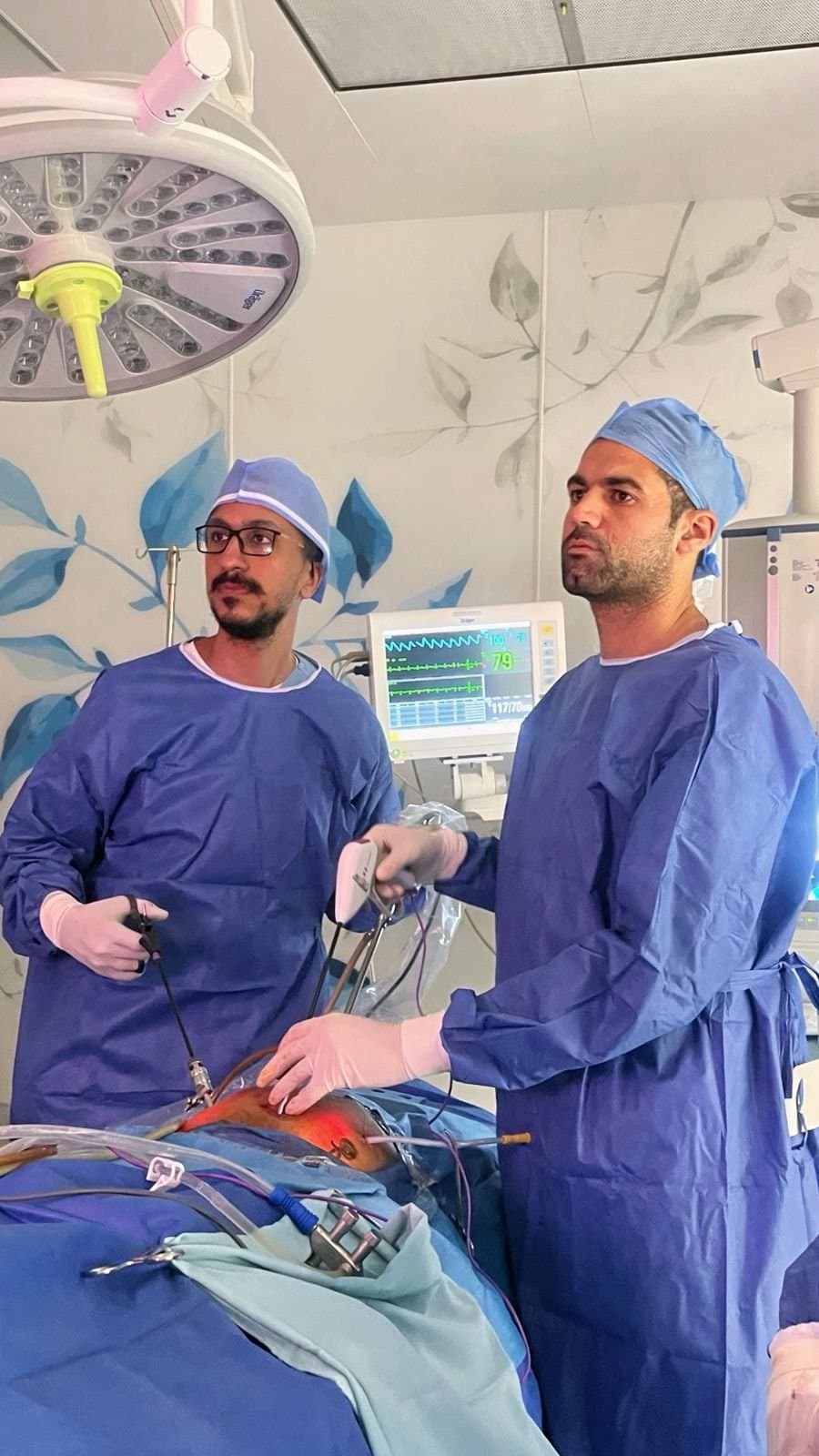
Most gynecologic surgery no longer needs a large incision. Through a few millimetre openings, Dr. Omar performs the procedures that used to mean weeks of recovery — with smaller scars, less pain, and a much faster return to your life.
Is this you?
- You’ve been told you need open surgery and want a second opinion
- Fibroids causing heavy bleeding, pressure or repeated pregnancy loss
- Recurrent ovarian cysts under “watch and wait” for too long
- Polyps or adhesions found on scans
- A planned hysterectomy you want done the least invasive way
Fibroid removal (myomectomy)
Removal of fibroids while preserving the uterus and, where possible, fertility.
Ovarian cyst surgery
Careful cystectomy that treats the cyst and protects the ovary’s reserve.
Hysteroscopic surgery
Polyps, septums and intrauterine adhesions — corrected from the inside, no incisions at all.
Minimally invasive hysterectomy
When hysterectomy is medically necessary, it can often be performed laparoscopically for a shorter recovery.
Heavy bleeding treatment
Finding the cause of abnormal bleeding and fixing it — not just managing it.
What to expect
- 1
Consultation with your scans
visit 1An assessment of whether keyhole surgery is appropriate for your case, with a clear explanation of why.
- 2
Preparation
daysSimple pre-operative tests, anesthesia review, one clear checklist.
- 3
The operation
1–3 hoursA few millimetre openings instead of one long incision.
- 4
Home
same or next dayWalking the same evening in most cases.
- 5
Back to your life
days, not weeksDirect follow-up with the surgeon who performed your procedure.
Common questions
Most patients go home the same or next day and return to normal life within days — versus the weeks an open operation demands. Your exact plan depends on the procedure.
A few millimetre marks that fade with time — usually two to four tiny openings instead of one long incision.
Usually, yes — size alone rarely rules out laparoscopy in experienced hands. Bring your scans; the honest answer comes from your specific case.
If you were told you need open surgery, it is worth asking whether keyhole is possible. It usually is.
Start with a conversation.
At the first consultation, we review your history and results, explain the options, and agree on the next step.