
Full IVF. No daily injections.
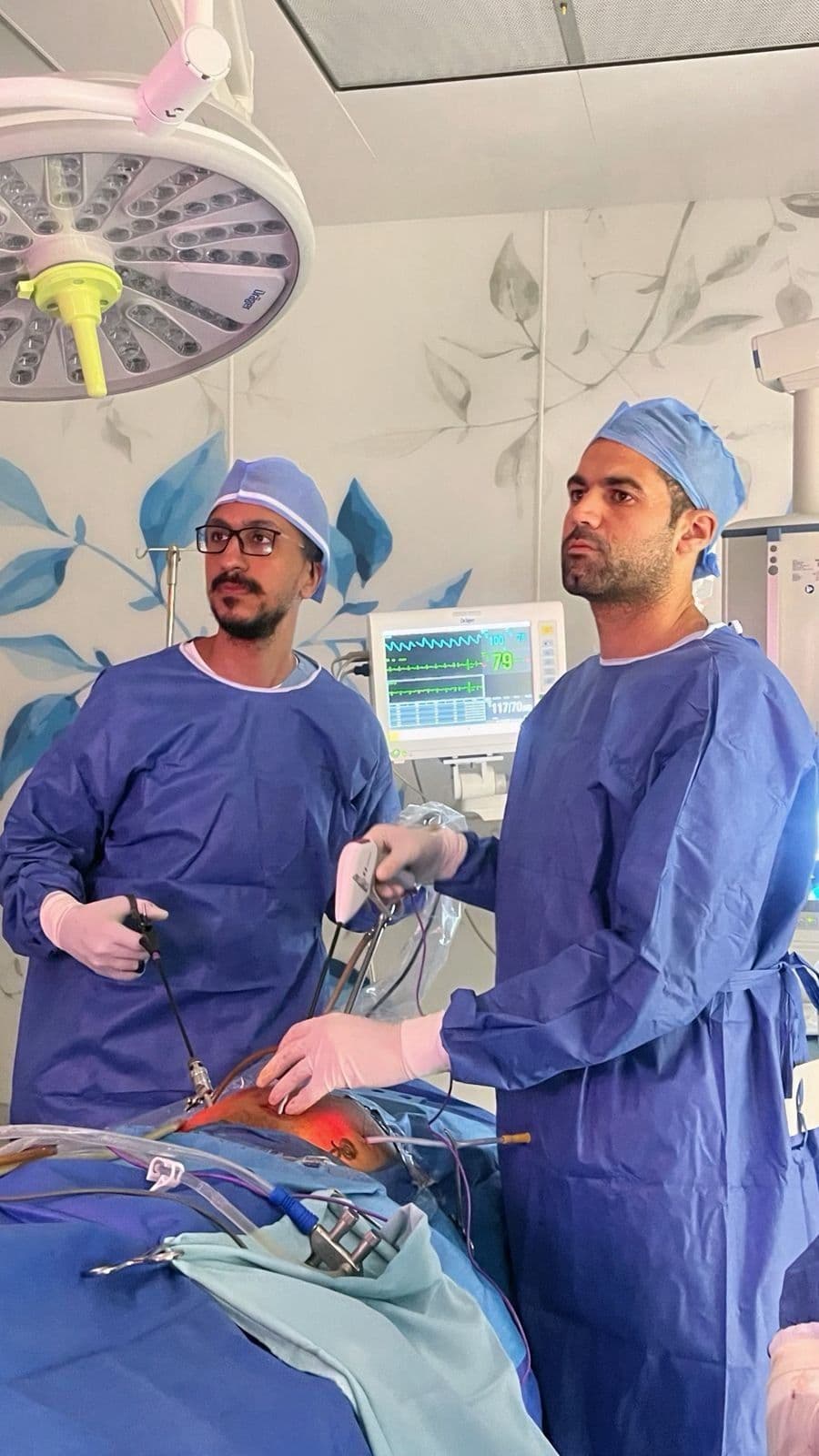
A complete IVF cycle in which stimulation medication goes through a small catheter under the skin, instead of a new injection every day. Pioneered in Egypt by Dr. Omar Aboali.
Book a consultationStimulation through one small catheter
A conventional IVF cycle means a self-administered injection every day of ovarian stimulation. With No-Needle IVF, a small, flexible catheter is placed under the skin of the abdomen, and compatible stimulation medication is given through it instead of a new needle each time. The catheter stays in place for about eight days. The rest of the cycle is unchanged: monitoring, egg retrieval, fertilization and embryo transfer.
Assessment
A review of your history, tests and expected response to determine whether No-Needle IVF is suitable.
Catheter and stimulation
A small catheter is placed under the skin and compatible stimulation medication is given through it, monitored with scans and blood tests.
Retrieval & fertilization
Egg retrieval under sedation, followed by fertilization using IVF or ICSI in the laboratory.
Transfer & follow-up
Embryo transfer followed by a pregnancy test 10 to 14 days later.
No-Needle vs conventional IVF
Who may benefit
- Needle-phobic patients for whom daily injections were the barrier to starting IVF
- Women who had a previous IVF cycle and dreaded the injection phase most
- International patients looking to complete treatment in Egypt
- Patients whose stimulation medications are compatible with the catheter
No-Needle IVF is not suitable for every case, and not every IVF medication can go through the catheter. Blood tests, some medications and the procedures themselves still involve needles. The decision depends on your medication protocol, ovarian reserve, age, medical history and expected response to stimulation. The consultation will establish whether it is an appropriate option for you.
Related articles
All articles
IVF injection tips: how No-Needle IVF makes fertility treatment more comfortable
Why IVF needs daily injections, how the No-Needle IVF catheter replaces repeated needle sticks during stimulation, practical tips for using it, and who it suits.

IVF without daily injections — how No-Needle IVF actually works
The injections are the part everyone dreads. Here’s how a full IVF cycle happens without them — and who it suits.
Ask if No-Needle IVF fits your case.
Send your reports and medical history for an initial assessment.